
A crosshatched pattern in a photograph is not enough to identify elephant ivory. Resin can have a similar pattern, even beneath its surface. On a polished or carved object, the face shown in the photograph also affects which features are visible.
In this article
Imagine someone sends you a photo of a cream-coloured cigarette holder. When you zoom in, you see fine lines crossing one another. The photograph is sharp and the lines are clear. Yet the main question remains: what material are those lines actually part of?
What does “ivory” mean in a product description?
In craft descriptions, “ivory white” can describe a colour and “tusk-shaped” can describe an outline. Neither term claims that the object is made of elephant ivory. A term such as “serbuk gading” (literally “ivory powder”) also needs to be read alongside an account of the material’s composition.
Anatomically, ivory comes from teeth. Bone is a different tissue, while resin is a material that can be shaped and coloured with pigments. Once polished, all three can look similar on a phone screen. For examples of how trade names are used, see the article on serbuk gading and Sri Gading.
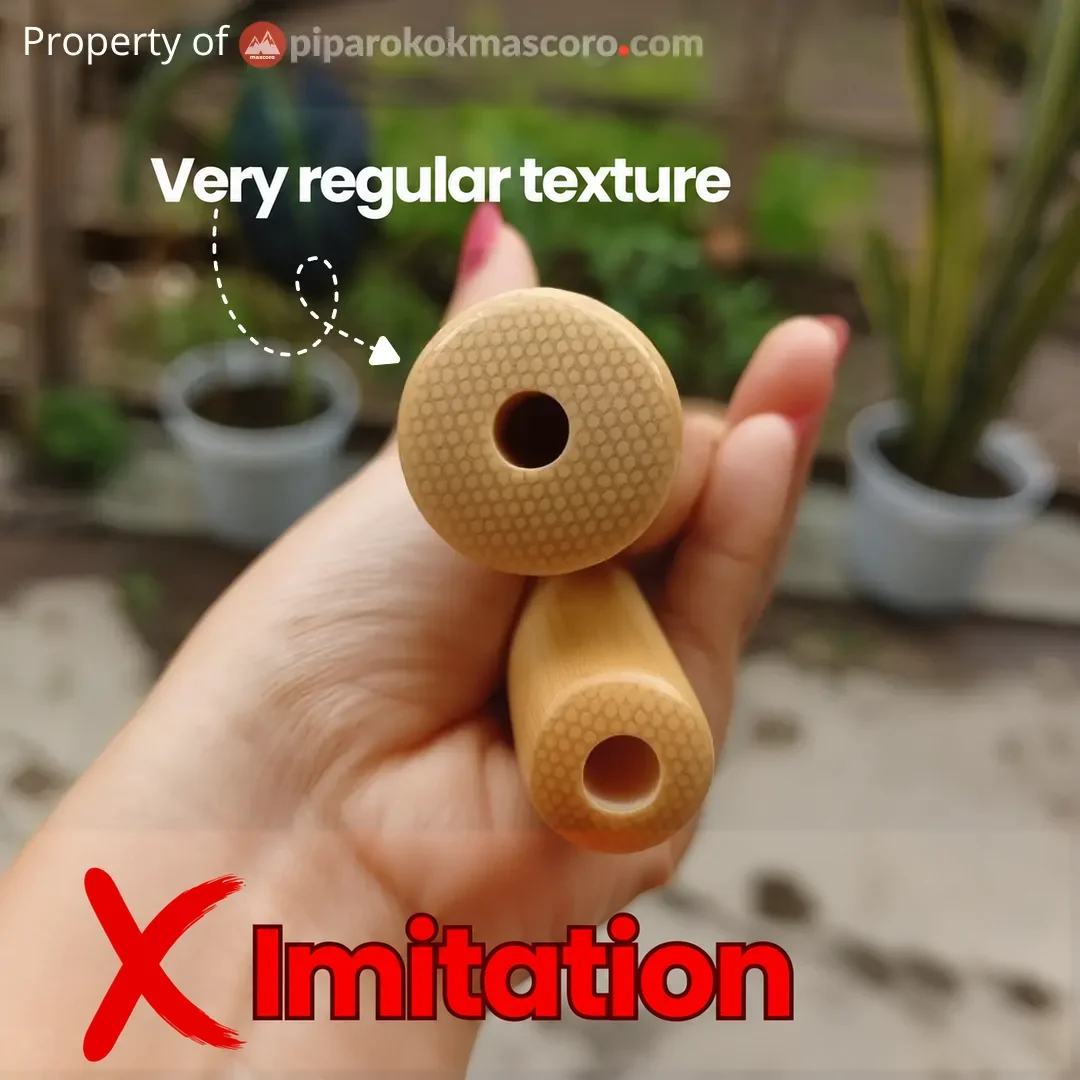
Why can Schreger-like crosshatching be misleading?
In a cross-section of elephant ivory, the dentine structure can show intersecting lines. These are known as Schreger lines. In a finished object, the surface facing the camera may be curved or cut lengthwise. Faint markings alone therefore cannot establish that an object is synthetic either.
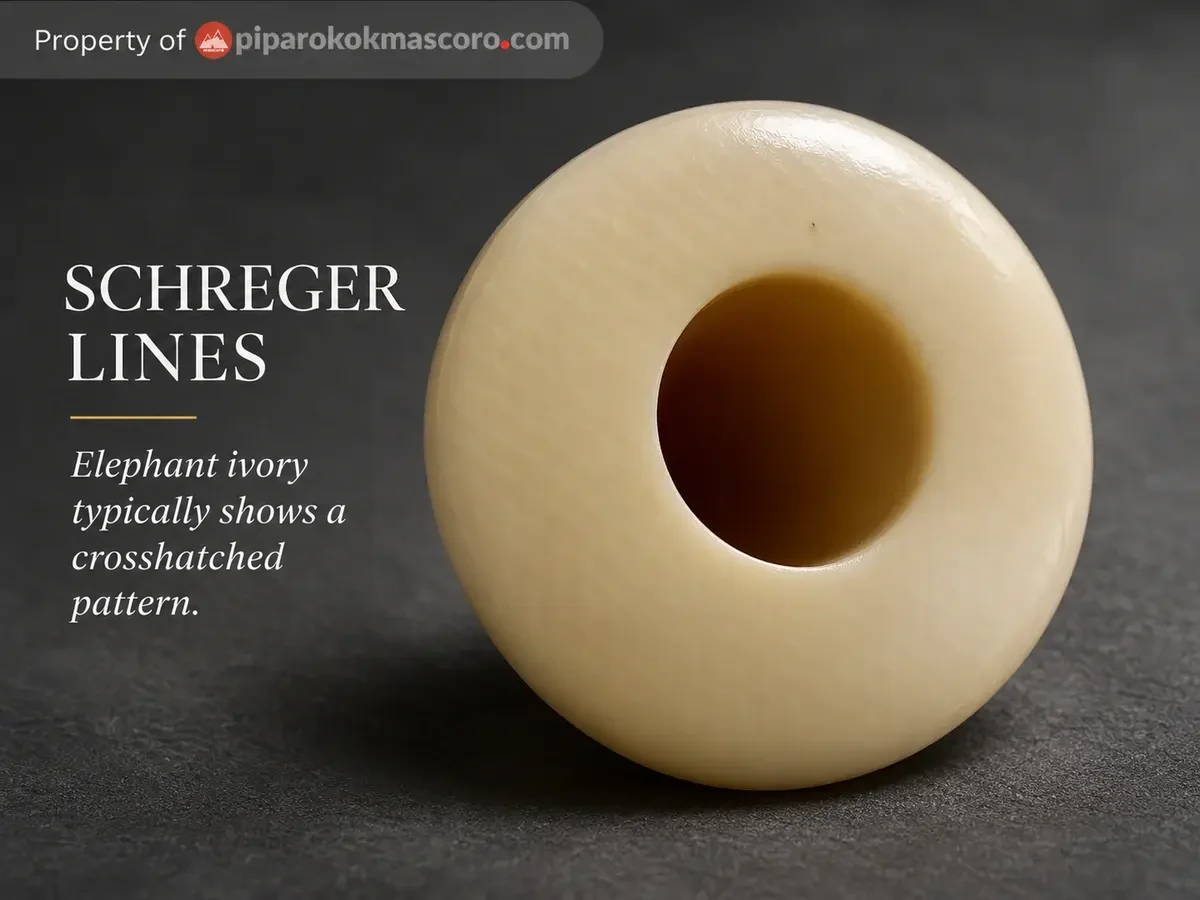
Consider an example that goes beyond comparing two photos. A laboratory at the Gemological Institute of America (GIA) examined two objects with fine striations and patterns resembling Schreger lines. Raman analysis identified both as polymers. The CITES identification guide also notes that layered synthetic materials can produce similar patterns. Even a pattern extending beneath the surface leaves the question open.
What can the surface actually tell you?
| What you see | What it can mean | Limits of the observation |
|---|---|---|
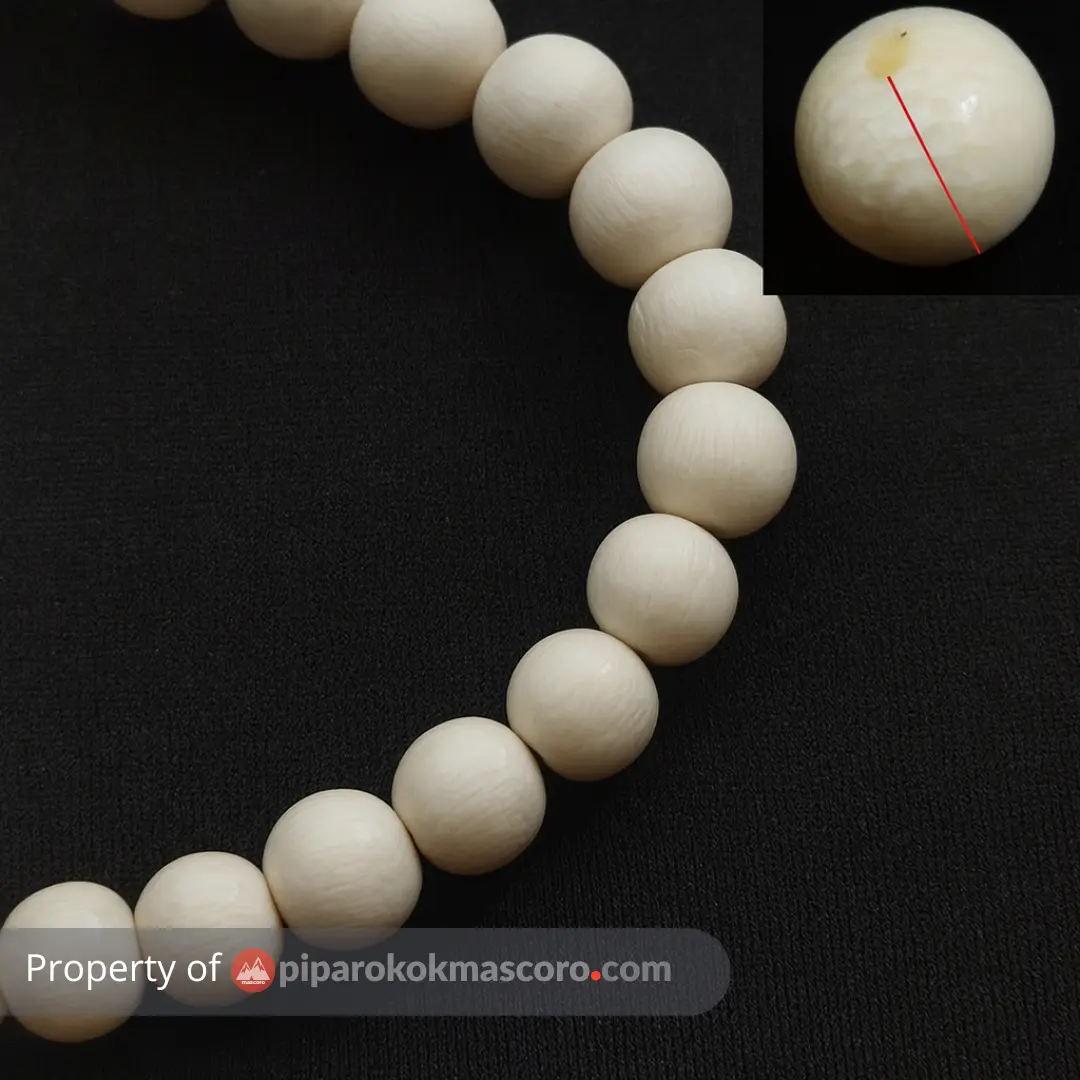
| Fine dots or lines on the surface | The traces of blood vessel channels in bone can appear as dots or lines. | A single dot in a photograph could be a channel, a stain or a surface flaw. |
| A crosshatched or repeating pattern | Natural materials and imitations can both show patterns resembling crosshatching. | Repeated motifs and neatly formed lines alone cannot authenticate a material. |
| Cream colour and sheen | Polish, pigments, lighting and age can all affect appearance. | A glossy or yellowish surface cannot establish the species or the object’s age. |
Can a UV lamp or a hot needle identify the material?
In the GIA study of two resin specimens, the researchers recorded reactions to UV light alongside other observations. Laboratory instruments confirmed that the material was a polymer. The results for those two specimens do not establish how every resin will react under a banknote-checking lamp.
Keep the surface of an old object intact. Scratching it, sanding it or touching it with a hot needle can leave a permanent mark. If you want to document it, photograph the whole object and any details already visible, and keep notes on its history. These are more useful in a consultation than a fresh test mark.
What should you do with an inherited object that might contain ivory?
Write down what you actually know: who gave you the object, how long it has been in the family and whether it came with documents. A family story about its age or an advertisement calling it an “antique” establishes neither its species of origin nor its legal status.
In Indonesia, Article 21(2)(c) of the Conservation Law, as amended by Law No. 32 of 2024, sets out prohibitions covering the storage, possession, transport and trade of parts of protected animals and objects made from them. If you suspect an object contains elephant ivory, contact your local Natural Resources Conservation Agency (BKSDA) for guidance before taking it anywhere, shipping it or offering it to anyone.
FAQFrequently asked questions
If I can’t see crosshatching, must the object be resin?
No. The orientation of the photographed face, the size of the object, its carving and its polish can all make a pattern difficult to see.
Are bone and ivory the same material?
Ivory is dental tissue. Bone has its own structure, including blood vessel channels that sometimes show at the surface.
Does identifying the material also establish that the object can be sold?
Identifying a material and establishing its legal status are separate questions. If the object may contain parts of a protected animal, ask your local BKSDA about documentation and how to handle it.

Kharisma Candra
Founder of Pipa Rokok Mascoro in Balung, Jember. He works with local craftspeople and shares his experience with cigarette holders. About me (in Indonesian)
Sources
- Gemological Institute of America — two resin specimens with ivory-like patterns
- CITES — identification guide for ivory and ivory substitutes, fourth edition (PDF)
- Canadian Conservation Institute — distinguishing ivory, bone, horn and imitations
- Indonesia’s BPK legal database — Law No. 32 of 2024 on conservation