
A tobacco leaf appears on the coat of arms of Jember Regency. If you know Jember through the gifts people bring home, though, you might picture coffee from Silo or a packet of suwar-suwir sweets. Follow the trail of those sweets to Balung District. From one village to the next, you’ll find people making everything from bite-sized sweets made with fermented cassava to drums, beads, wooden kitchenware and cigarette holders.

Jember tobacco and coffee from Silo
One of the crops grown in Jember is Besuki Na-Oogst tobacco. Its leaves can play different roles in a cigar. Some form the filler, another leaf binds that filler together, and the outermost wrapper is the leaf you see. An IPB University study of tobacco estates in eastern Jember also describes these uses.
If coffee is more familiar to you, there’s another way to get to know Jember’s crops. In Sidomulyo, a village in Silo District, residents grow robusta coffee. The village government records that local people also teach others how to grow coffee and process the beans. In Sidomulyo, you can try a cup in the very village where the beans grew.
Following suwar-suwir sweets back to Balung
With that coffee, try a piece of suwar-suwir. It is sweet, with a little tang from tapai, or fermented cassava. The cook mashes the tapai, then cooks the mixture, stirring all the while. Only when it has cooled and firmed up can it be cut into small pieces. That’s quite a stint in the kitchen for something you can finish in two bites. The method is recorded in the book Pesona Jawa Timur.
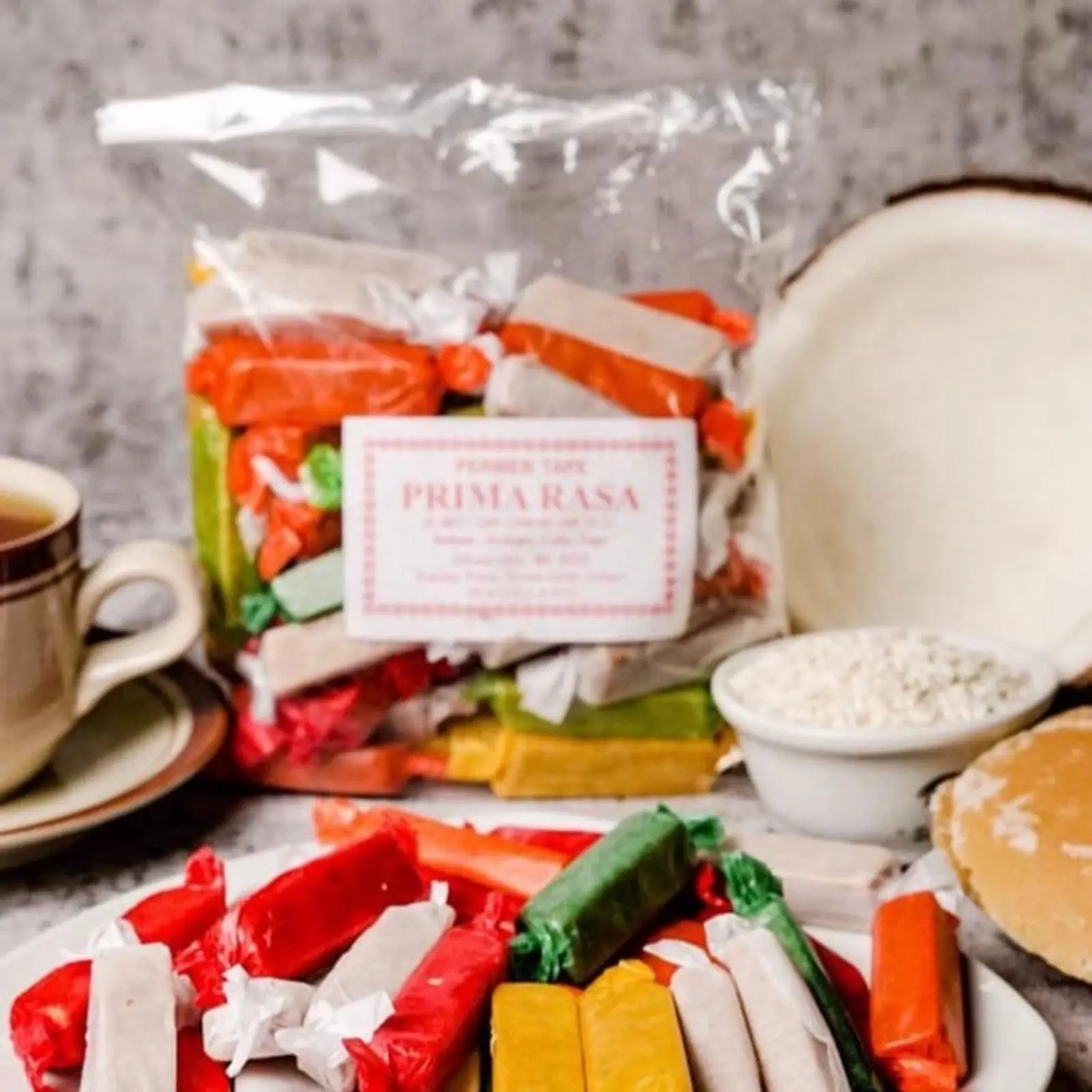
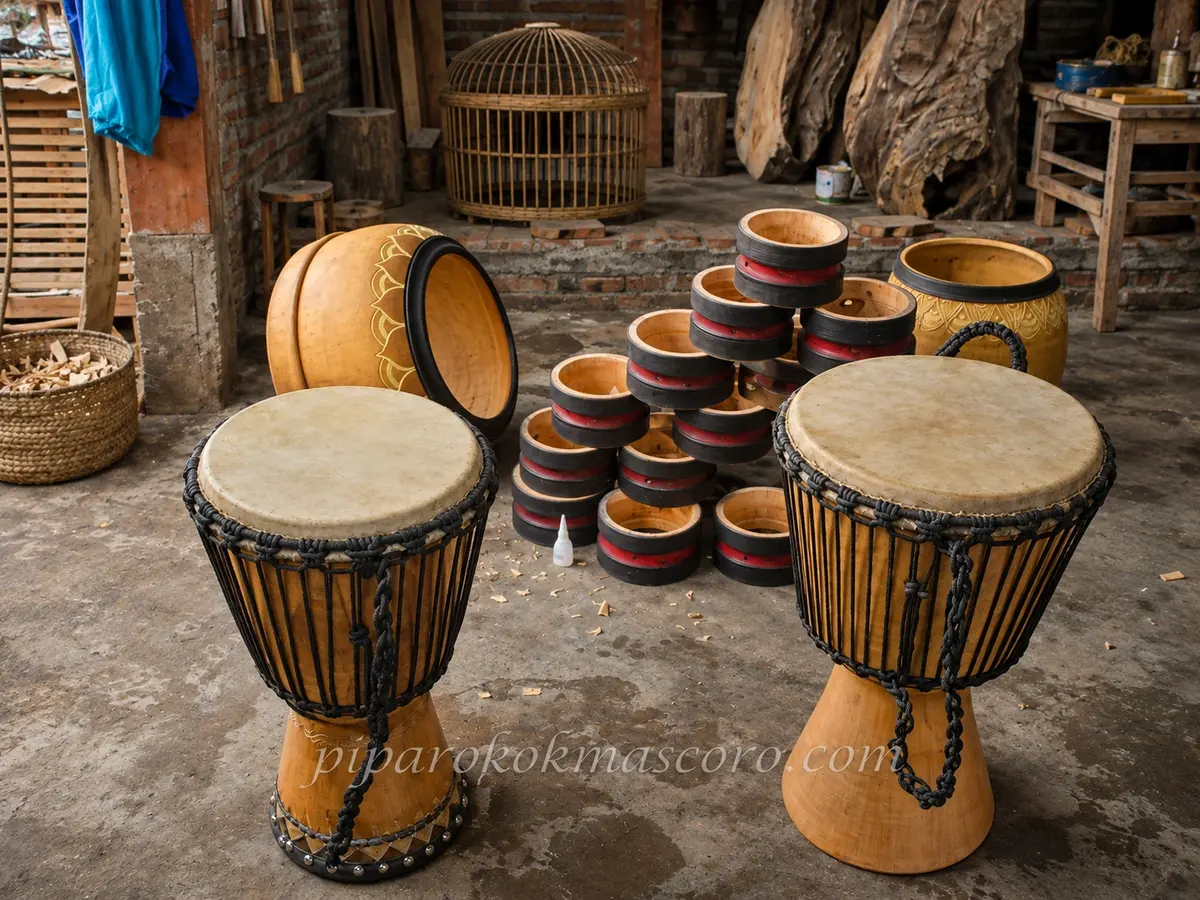
Gumelar is one of the villages known for making suwar-suwir. From here we can see quite another side of Jember without leaving Balung District. Balung Kulon has makers of gendang and ketipung drums. In Tutul, the local craft is evident in much smaller objects, from individual prayer beads and decorative beads to cigarette holders. Village government reports from Balung District record the specialties of all three villages.
From leftover wood to the dinner table
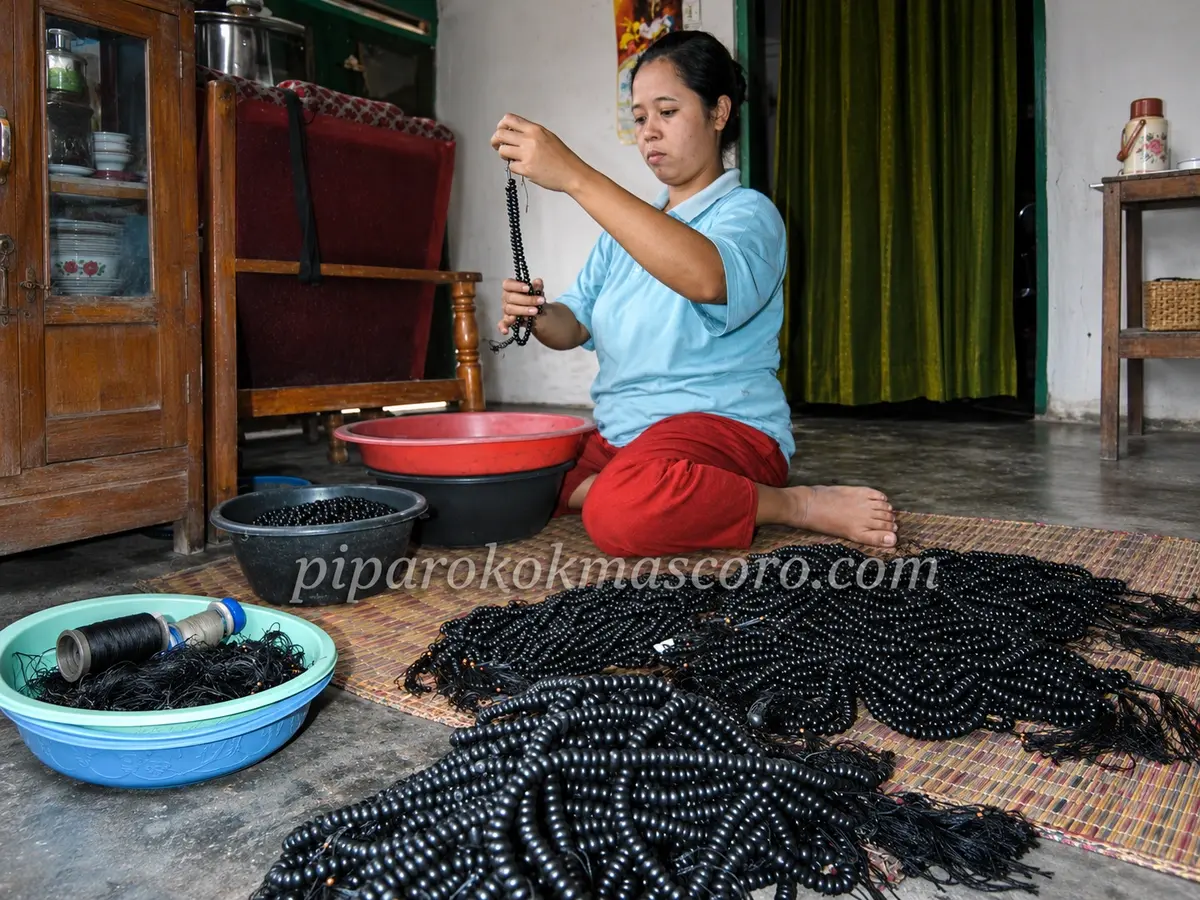
If you stop in Tutul, you can see the village’s crafts in galleries and in the homes where people display their work. Before a string of prayer beads reaches the display case, someone has to thread the beads one by one. A number of women in the village take on this work to supplement their families’ income. The work happening in those homes is part of what makes Tutul an interesting place to visit. A University of Jember study of the village documented both the galleries and the women who string the beads.
From strings of prayer beads to cigarette holders
Other craftspeople in Tutul make their own choices about what to produce. Abdul Hadi, for example, has run his craft business since 1994. In a 2024 interview, he talked about the prayer beads he makes from agarwood. For cigarette holders he works with other woods, including tamarind heartwood, known locally as galih asem. Even in the hands of one artisan, the material changes with the object being made. Alfani Dewi Kurniawati recorded Abdul Hadi’s account in research at UIN Kiai Haji Achmad Siddiq Jember.
The same village is home to a group called KUBE Mandiri. On a visit on 25 January 2022, Jember Regency’s Office of Cooperatives and Micro Enterprises recorded that the group made cigarette holders along with prayer beads, bracelets, rings and walking sticks. So if you’re wondering whether Jember makes cigarette holders, it does. Jember is one of the regions that produces them, and in Tutul you can meet the people who do the work.
The story behind the fish-fin mouthpiece
Among the holders made in Tutul, there’s one model I recognise by its tip. Seen from the side, the end that goes to the mouth looks like a fish fin. Tutul’s older craftspeople were making that shape before I started my business. Their work was my starting point when I designed a holder for Mascoro.
I gave the body a curve. At the front, I made the area around the cigarette socket wider to accommodate the cigarette. From there the body gradually tapers as it curves.
At the other end, I took the fin shape off the mouthpiece, the part that rests against the lips. I kept its size in proportion to the front. I wanted the curve to look right from the side and sit comfortably in the hand.
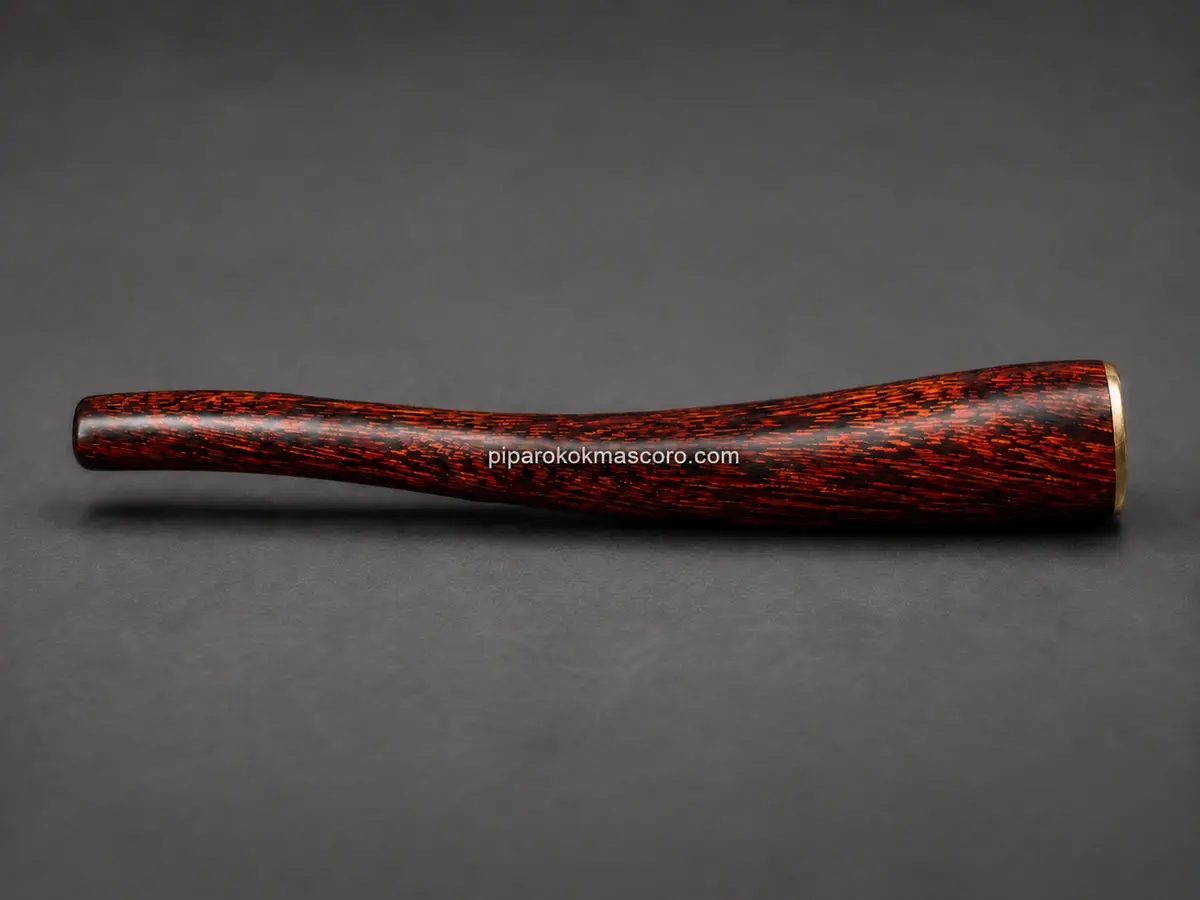
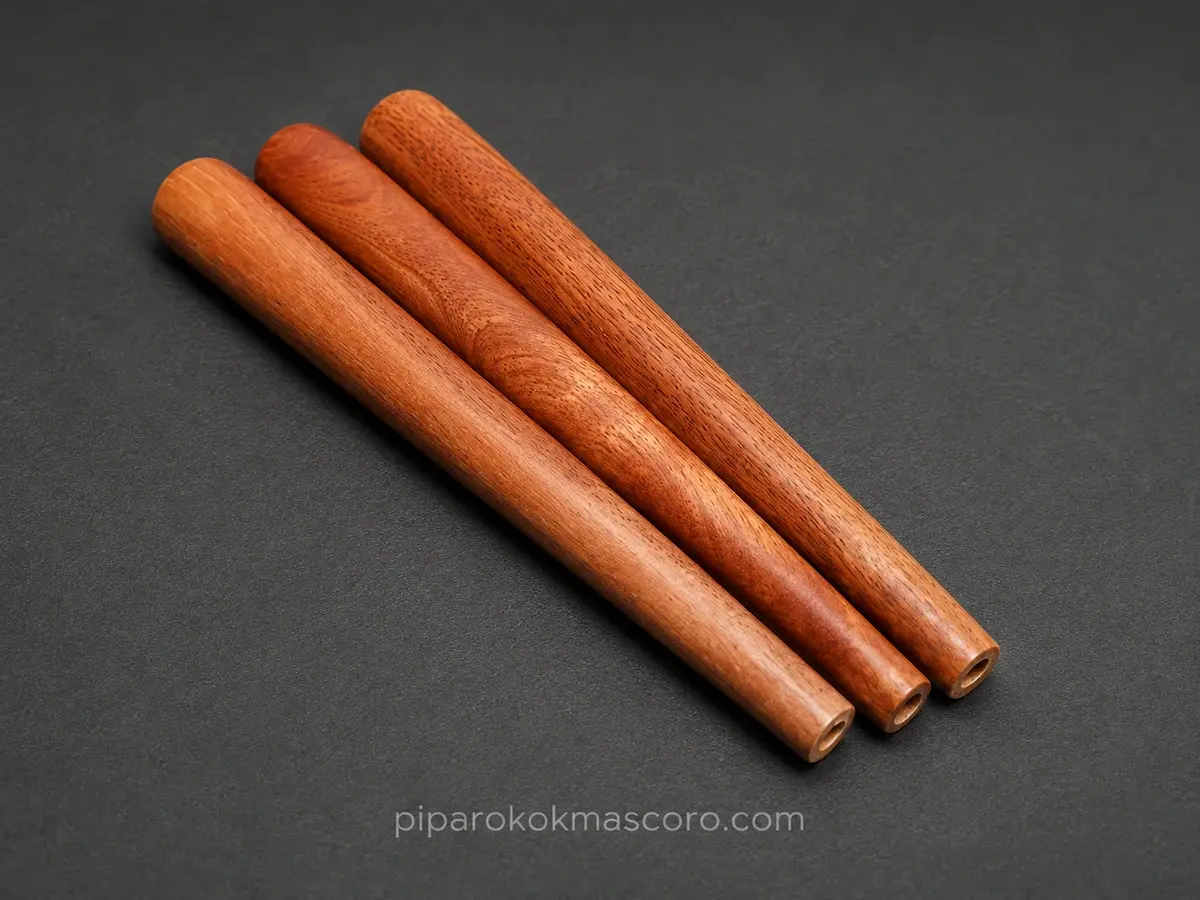
Mascoro’s office is in Balung Kidul. At our workshop in Tutul I work with experienced craftspeople I selected myself. Both villages are in Balung District. I source the materials and draw the designs, and the craftspeople shape the pieces. This curved model turned out as I had planned. I tell the story of how we started working together on the About Mascoro page (in Indonesian).
Five things I check before a holder goes out
- Precision and proportion. I compare the dimensions at both ends with the design. Viewed from the side, the mouthpiece should look in proportion to the body.
- A smooth, polished surface. Even after the surface shines, I look for scratches that worn sandpaper can leave behind. It has to feel smooth under my fingers, too.
- Comfort in the hand. I hold the piece to see whether the size and curve I drew actually fit my fingers.
- A socket that fits. I check the seat for the cigarette. Too small and the cigarette is hard to insert. Too large and it sits loose.
- Sealed surface pores. In my experience this is one of the finishing details I need to get right for the holder to last in use.
Of all the things people make in Tutul, this curved holder is the one I can tell you about from personal experience. When you browse the Mascoro holder collection, look at this model from the side. Follow the outline from the wider front to the mouthpiece. That curve is where you can see what I changed from the older Tutul design.
FAQQuestions about Tutul’s crafts
What crafts do people make in Tutul?
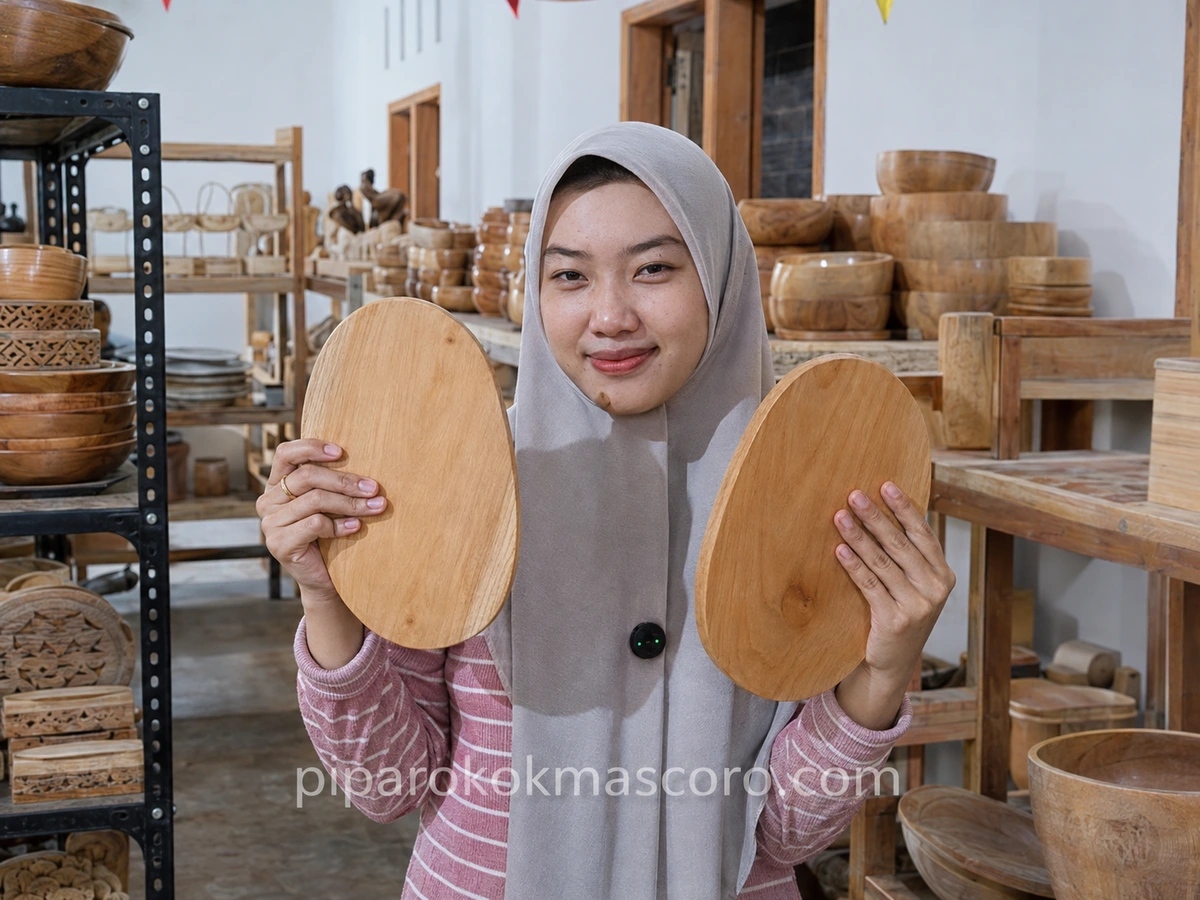
In Tutul, Balung District, local craftspeople make wooden kitchenware such as spoons, bowls and plates. Others make beads, strings of prayer beads, bracelets, necklaces, walking sticks and cigarette holders.
Where are Mascoro cigarette holders made?
We make our holders with craftspeople at our workshop in Tutul. Our office is in Balung Kidul. Both villages are in Balung District, Jember Regency, East Java.
How does Mascoro’s curved holder differ from the older Tutul design?
The older design that inspired me had a fish-fin mouthpiece. For the Mascoro version I removed the fin and curved the body. The front is wider and the body tapers towards the mouthpiece.

Kharisma Candra
Founder of Pipa Rokok Mascoro in Balung, Jember. Kharisma works with local craftspeople and writes about cigarette holders. About me (in Indonesian)