
✦ Short answer
Kelor hitam wood and galih kelor hitam are often described as two different materials: wood that remains mostly organic and material that has become stone-like through mineralisation. Sellers use both names in different ways. A name, colour or photograph alone cannot establish the species, age or fossil status of a piece.
- Wood: When it remains mostly organic, the wood fibres and the properties of the wood still define the material.
- Mineralised material: Natural processes can fill spaces in the tissue with minerals or replace the original material.
- Galih: Ask what the seller means by this term. It does not necessarily mean a fossil.
If you have been looking for material for a cigarette holder or browsing a collection of black wood, you may have come across two similar names: kelor hitam wood and galih kelor hitam. Both look dark at first glance. Does galih mean an older part of the tree, or wood that has become a fossil?
The name alone cannot tell us. Looking separately at the trade names, the material properties and the process of mineralisation helps you decide what to ask before buying.
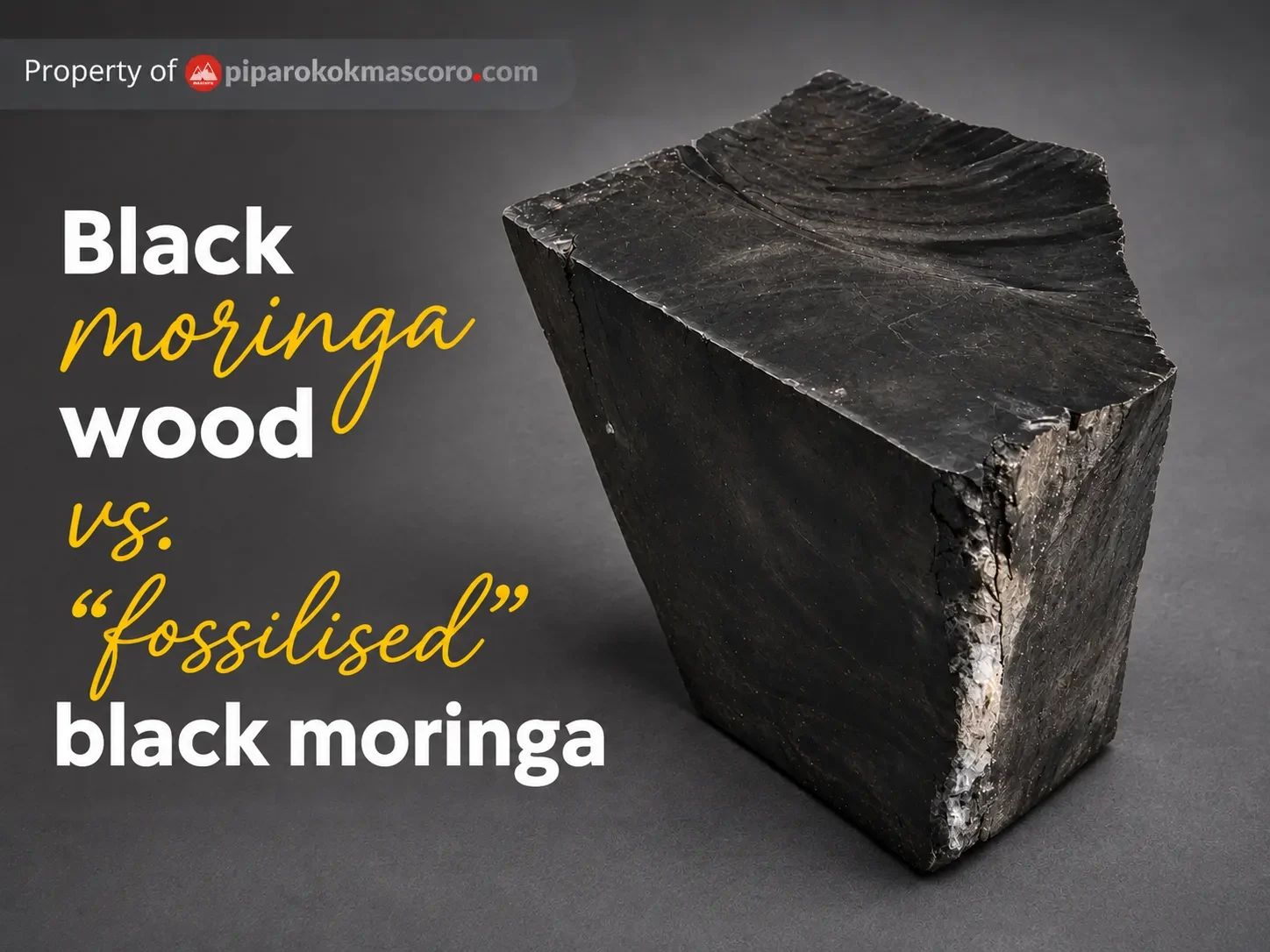
What do kelor hitam wood and galih kelor hitam mean?
In trade and everyday conversation, kelor hitam is a name used for dark wood. It helps people recognise which product someone means, but it does not give the scientific name of a tree or establish how the material formed.
The word galih commonly means the inner wood, or heartwood. Sellers use it in different ways. Some mean a particular part of the wood, while others apply it to material they say has become stone-like. Ask what the seller means before assuming that all “galih kelor hitam” is fossil wood.
When kelor hitam still has the properties of wood
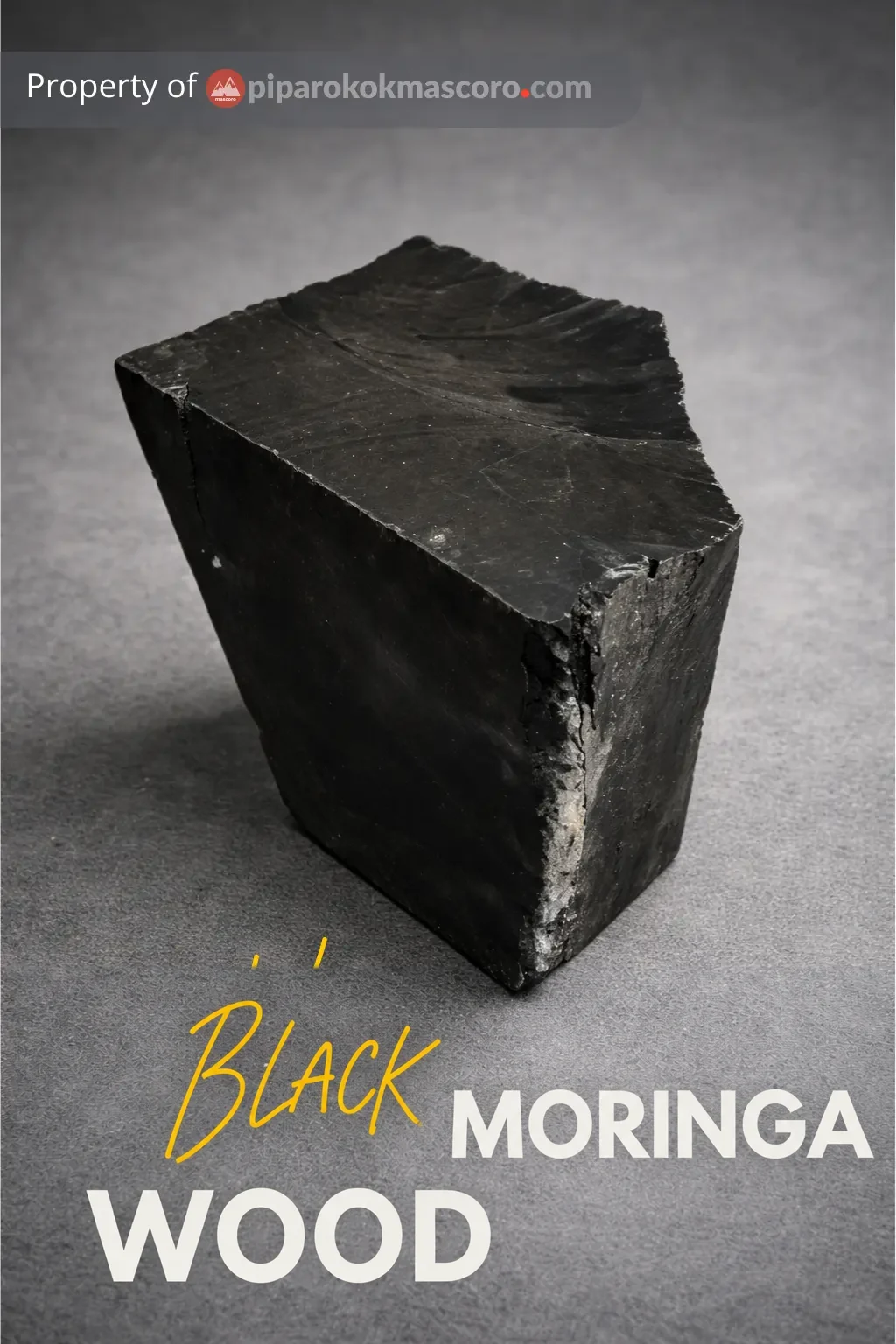
In a piece that remains mostly organic, wood tissue still makes up most of the material. You may see grain or growth patterns on the surface, though each piece looks different. Craftspeople use some of this wood to make cigarette holders and other items.
Various conditions and processes can darken wood. A black colour alone does not show that the wood came from a swamp or underwent carbonisation. Nor does the name “kelor” establish that the wood came from the familiar moringa tree whose leaves are eaten as a vegetable.
How are galih, fossils and mineralisation related?
Some material sold as galih is described as wood that has undergone mineralisation. In one form of preservation, water carries minerals that fill spaces in the wood tissue. This process is called permineralisation. In a different process, minerals replace the original material.
According to the National Park Service, permineralisation and replacement are two different mechanisms of preservation. Mineral types and amounts can vary. Some fossil wood retains original material, and a stone-like appearance alone cannot establish that a specimen is fossil wood.
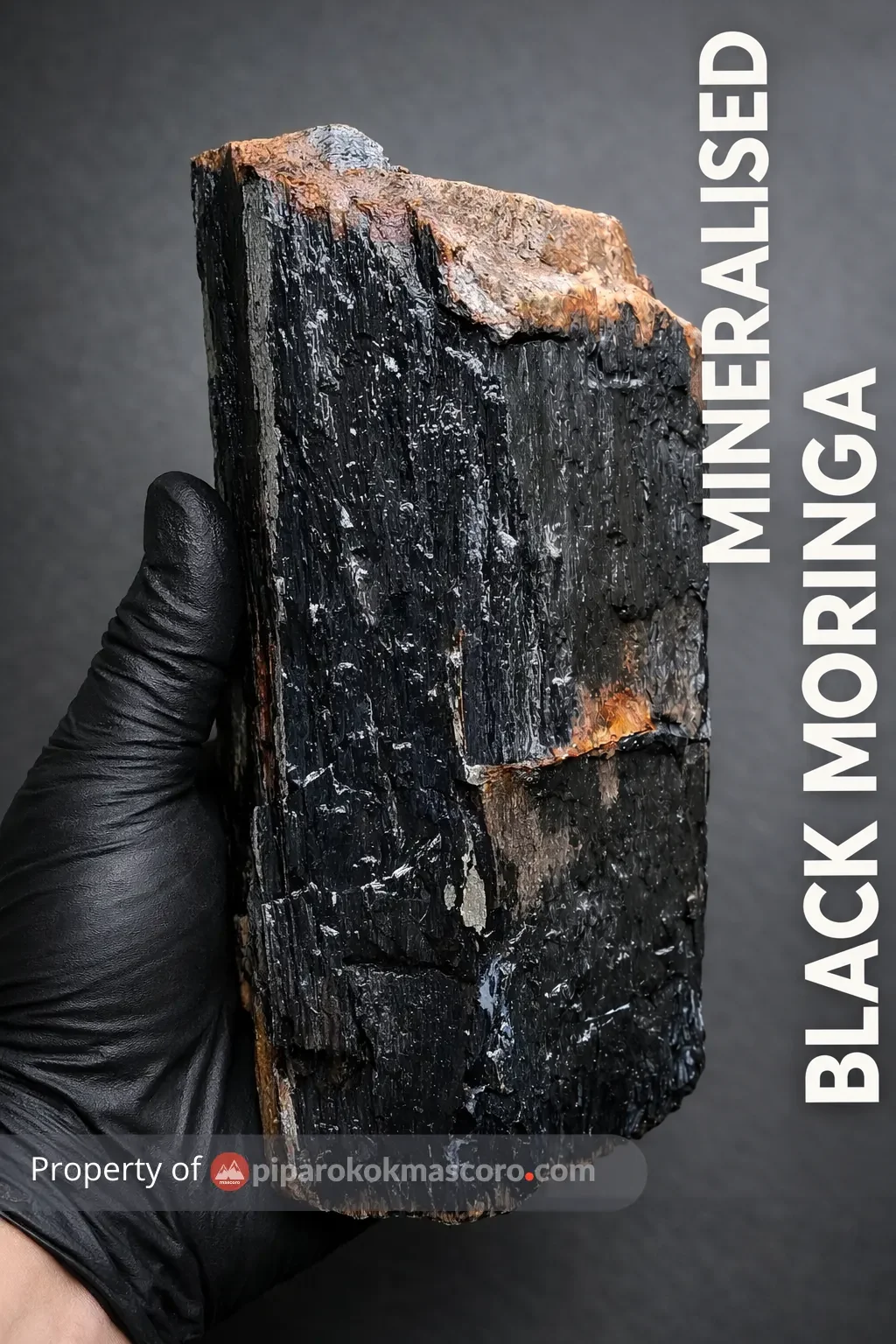
If someone claims a piece contains a particular mineral, such as silica, ask what supports that claim. If they date it to hundreds of thousands or millions of years ago, ask about its origin and how it was dated. Handling the piece or looking at a photo cannot establish its age.
Kelor hitam wood and galih kelor hitam compared
This comparison covers two material conditions that people commonly discuss: mostly organic wood and extensively mineralised material. The second column does not imply that everything sold as galih has been shown to be mineralised.
Two conditions a piece can be in
Mostly organic wood
Wood tissue still makes up most of the piece. Moisture, grain, density and processing all influence its characteristics.
Extensive mineralisation
Minerals can fill spaces in the tissue or replace the original material. Its properties depend on the minerals and the extent of alteration in that sample.
| Characteristic | Mostly organic wood | Extensively mineralised material |
|---|---|---|
| Composition | Wood tissue still predominates. | Minerals fill spaces or replace original material in varying proportions. |
| Appearance | May show grain or growth patterns. | Can retain visible wood patterns after its material properties have changed. |
| Weight and hardness | Vary with species, density and moisture content. | Can feel dense and hard, depending on the specimen and its minerals. |
| Working the material | The approach depends on the wood’s condition and properties. | Stone-like material requires appropriate tools and techniques. |
| Age | The name or colour cannot establish an age. | Appearance or a claim that it is a fossil cannot establish its age. |
Weight and hardness offer initial clues, but neither establishes mineral content. Dense wood can feel heavy, and the amount of moisture in a piece also affects its weight. If the identity of the material is an important part of its value, it needs appropriate examination.
Which material suits cigarette holders and other crafts?
For a functional cigarette holder, look beyond the name and colour. The condition and dryness of the wood, the part used, construction, finish and workmanship all matter. Ask whether the maker intended the piece for use as a holder or for display.
Stone-like material can appeal to collectors or suit ornaments and certain crafts. Mineralised materials vary. A fossil label alone does not guarantee that a piece is heat-resistant, free of cracks or suitable for a part of a holder exposed to heat.
If you already own a kelor hitam holder, check its condition and follow the maker’s care instructions. Changes in temperature and the condition of the material are among the things to consider when investigating a crack.
How to assess the material before buying
Start with questions the seller can answer and details they can show you. Ask about the actual piece you will receive before getting drawn into a debate over the name.
- Ask what the name means.
Does “galih” mean heartwood, a trade name or a claim that the material has undergone mineralisation? - Ask about the origin and condition.
Ask where the material came from, whether it was dried or treated and whether the piece has any cracks or repairs. - Match the piece to its purpose.
For a holder you plan to use, ask whether the material and construction suit that purpose. For a collection, decide which characteristics you are looking for. - Ask what supports specific claims.
For claims about a species, mineral, age or fossil, ask what evidence is available. Testing may be necessary if certainty matters to your purchase.
Conclusion
The names kelor hitam and galih kelor hitam alone cannot tell you how the materials differ. Some pieces still have the properties of wood, while others have undergone mineralisation. The term galih itself has different meanings in the trade.
Asking about the condition, the origin and the evidence behind the seller’s claims makes it easier to choose and appreciate a piece without jumping to conclusions about its age or fossil status.
FAQFrequently asked questions
What is the difference between kelor hitam wood and galih kelor hitam?
Both are trade names. Mostly organic wood retains the properties of wood, while extensively mineralised specimens can have stone-like properties. The term galih alone cannot establish the condition of the material.
Is galih kelor hitam always a fossil?
Galih can mean the inner wood or heartwood in ordinary usage, while sellers may use it in several ways. Fossil status and the degree of mineralisation require evidence about the origin and appropriate examination.
Does kelor hitam wood come from the moringa tree?
A trade name alone cannot determine the species. Reliable identification requires traceable information about the wood’s origin and, when necessary, examination of its anatomy by a qualified specialist.
Does a black colour prove that the wood is fossilised?
No. Several processes and conditions can darken wood. Colour alone cannot establish fossilisation, age, species or mineral content.
Has all fossil wood turned to stone?
Fossil wood can be preserved in different ways. In permineralisation, minerals fill spaces in the tissue. In replacement, minerals take the place of some or all of the original material.
Which is older, kelor hitam wood or galih kelor hitam?
A name, a colour or a photograph cannot tell you. Dating requires information about the specimen’s origin and a method appropriate to that specimen.
Which is suitable for cigarette holders?
For a functional holder, choose material the maker has worked and tested for that purpose. Suitability depends on the individual material and holder design. A galih or fossil label alone does not guarantee heat resistance.
Is heavy, hard wood necessarily mineralised?
Weight and hardness provide clues, but both depend on the material, moisture, density and other factors. Its mineral content requires examination.
Why can a kelor hitam holder crack?
The material’s condition, moisture content, temperature changes, construction and use can all play a part. Each holder is different, so the cause cannot be established without examining it.
How can I ask a seller about the identity of a material?
Ask where it came from, what the name means, what condition the piece is in and what examination supports any claims about its species, minerals or age. Consider those answers in light of how you plan to use it.

Kharisma Candra
Founder of Pipa Rokok Mascoro in Balung, Jember. He works with local craftspeople and writes about cigarette holders from firsthand experience. About me (in Indonesian)
Sources
- National Park Service: Permineralization and Replacement, on the processes of fossil preservation.
- USDA Forest Products Laboratory: research on bog wood, an example of how wood darkens in certain environments.