
✦ Short answer
Kelor hitam, or “black moringa,” is a trade name for dark wood, including wood used to make cigarette holders. Its appeal lies in its distinctive dark finish and the character of the handwork. The name and colour alone cannot establish the tree species, the age of the wood or how it formed.
- What draws people to it: its dark colour, matte finish and handmade shape.
- Where it comes from: ask the seller or supplier about the origin of the individual piece.
- Care: avoid washing or soaking a kelor hitam holder.
If you have seen a simple matte-black cigarette holder, the seller may have described the wood as kelor hitam. It is a popular choice among Mascoro customers who like the distinctive look it takes on in a handmade holder.
Where does the name come from? Is this the same wood as the familiar moringa tree? And what does it have to do with wood found in swamps? Let’s look at those questions and at how to choose and care for a holder.
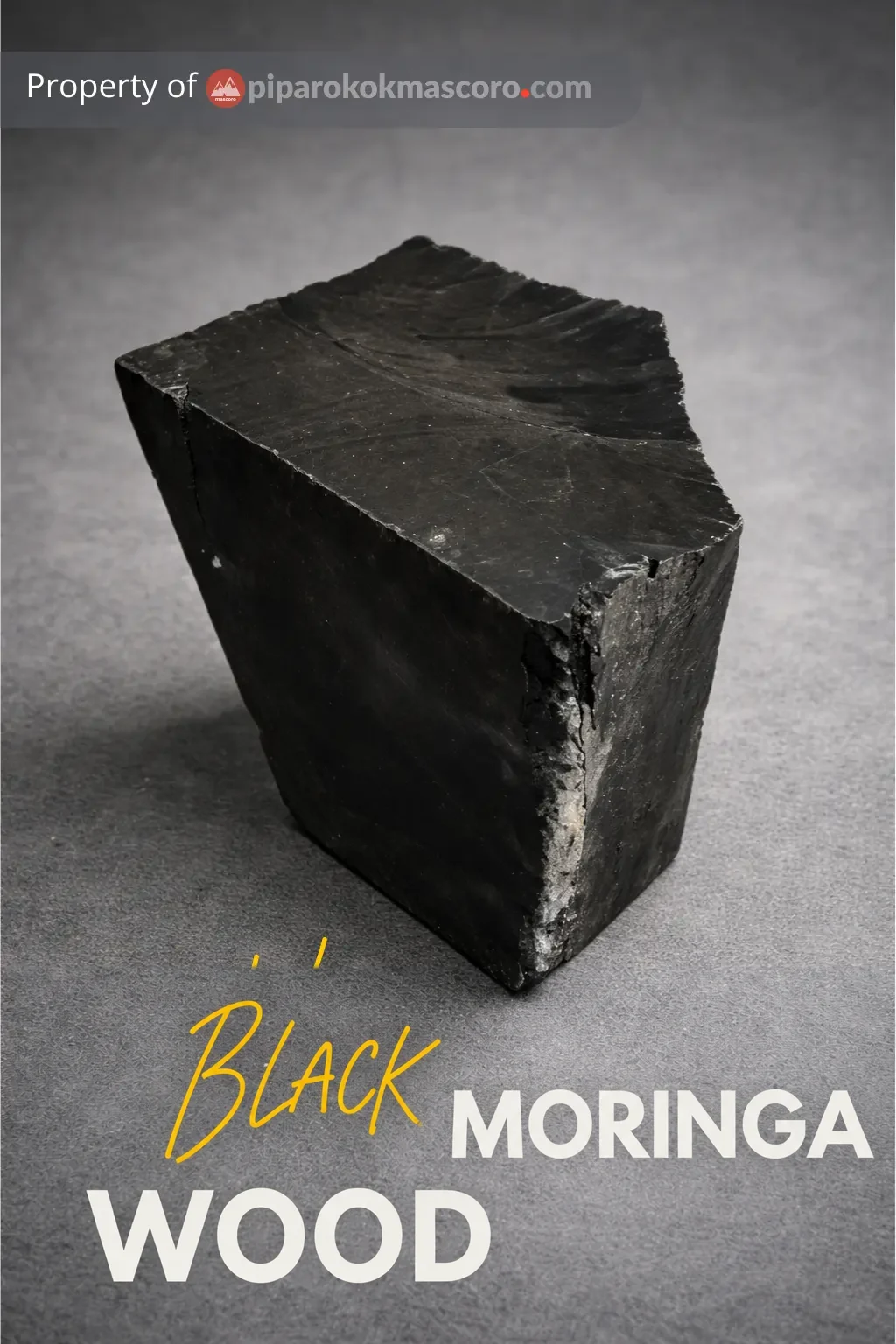
What is kelor hitam wood?
Kelor hitam is a trade name for dark-coloured wood. Craftspeople use it for cigarette holders, accessories and other handmade pieces. Mascoro holders made from it are known for their matte-black finish and compact shape.
A trade name helps buyers and sellers refer to the same product. However, “kelor” on a label does not identify a particular tree species. Identifying the wood requires traceable information about its origin and, where necessary, examination by someone qualified to do so.
Where does kelor hitam wood come from?
Some sellers trace their kelor hitam to Kalimantan, linking its appearance to wood that spent a long time in wet ground or a swamp. It is an interesting account, but pieces sold under the same name may come from different places and may have formed under different conditions.
Under certain conditions, a wet environment with little oxygen can slow decay. Prolonged burial or submersion can also change a piece of wood’s colour and properties. The conditions and duration need to be established for each specimen. A black surface alone cannot date it.
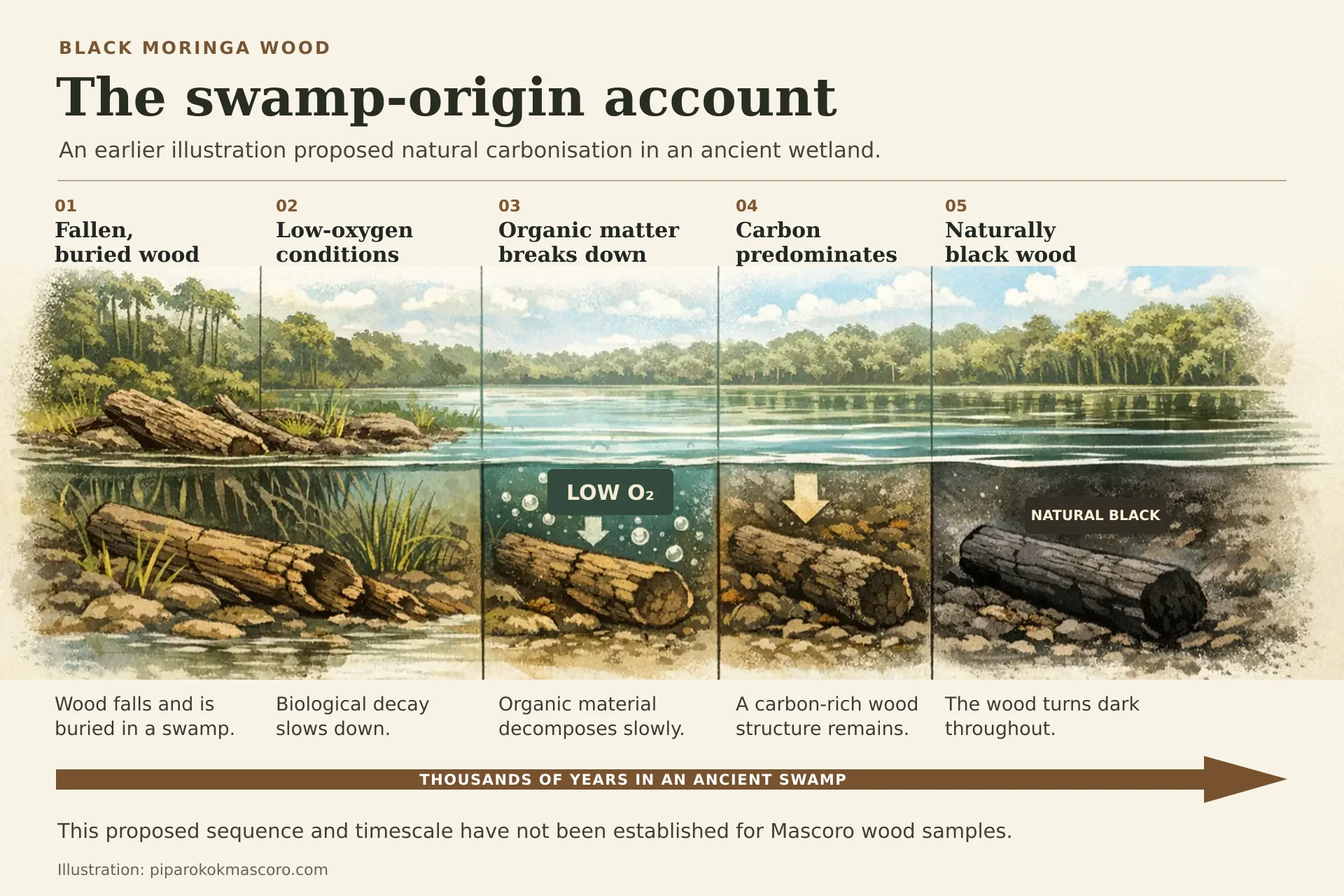
What can turn wood black?
The species, the environment, substances in the wood, processing and finishing can all affect colour. Research on some buried woods shows that the wood can darken when its constituents interact with the environment. For example, a study of waterlogged oak discusses the role of compounds in the wood and of iron in the darkening process.
That study examined oak. It did not test Mascoro’s wood. A dark colour therefore cannot establish that all kelor hitam has undergone carbonisation, is thousands of years old or comes from a particular swamp.
Characteristics of kelor hitam wood
What do people notice first? Most buyers are drawn to the appearance and finish. Here are some details you can see for yourself.
- A distinctive dark colour.
Black lends itself to a simple, understated design. Ask the seller about the colour and finish of the actual piece you will receive. - A matte or glossier surface.
The appearance varies with the material and the maker’s finish. People often choose a matte holder for its understated look. - Individual character.
The grain and condition of the wood vary. Those differences are part of the character of the material a craftsperson works with. - A choice of shapes.
Makers can shape the wood into mini holders, curved holders and other designs, depending on the piece and the maker’s skill.
Why use kelor hitam for a cigarette holder?
Kelor hitam appeals to people who like black wood and a simple shape. In a handmade holder, the maker shapes and finishes the wood to bring out its individual character. Mini holders are among the designs Mascoro customers often choose.
Look at the size, shape, construction, condition and product details. Two holders sold as kelor hitam can differ in shape and workmanship, so check the description of the actual item you plan to buy.
How do kelor hitam wood and galih kelor hitam differ?
The term galih often refers to the inner wood, or heartwood. Some sellers use it in another sense, including for material they associate with mineralisation. A piece described as galih is not necessarily a fossil or stone.
In its overview, the National Park Service explains that minerals can fill spaces in tissue or replace the original material through different forms of preservation. Establishing whether this happened to a particular piece requires information about the specimen and examination of the material.
Choosing and caring for a kelor hitam holder
Before buying, check whether the length and shape suit you. Look through the product photos, variants and description, and ask the seller about anything unclear. If a particular species or age matters to your decision, ask what evidence supports the claim.
Once you have the holder, avoid washing it directly, soaking it or boiling it. In Mascoro’s experience, too much contact with water can increase the risk of cracking. Let it cool before cleaning it with an appropriate tool, wipe the outside dry and store it away from knocks and pressure.
If it gets wet, wipe it with a soft cloth and let it dry naturally in the shade. If you notice a crack or a loose part, stop using the holder and consult the seller or maker.
Conclusion
The attraction of kelor hitam is its dark colour and the distinctive holders that craftspeople can shape from it. Its trade name alone does not tell you the species, age or formation process. Understanding the material and its care makes it easier to choose a piece and appreciate the handwork behind it.
FAQFrequently asked questions
What is kelor hitam wood?
Kelor hitam is a trade name for dark wood used in cigarette holders and other crafts. The name alone does not establish the species or the age of the wood.
Does kelor hitam come from the moringa tree?
The name does not identify a tree species. Identification requires traceable information about its origin and may also require examination of the wood.
Where does kelor hitam come from?
Some of the material is marketed as coming from Kalimantan. Ask the seller or supplier about the origin of the individual piece.
Does a black colour mean the wood has fossilised?
A dark colour alone cannot establish fossilisation, mineralisation or the age of a specimen.
What is the difference between kelor hitam wood and galih kelor hitam?
Sellers may use these names in different senses. Ask about the material’s condition and what the seller means by the term. The name galih alone does not establish mineralisation.
Why is kelor hitam used for cigarette holders?
The dark colour, matte finish and character of handmade pieces are part of its appeal. The wood’s condition, the design and the workmanship also affect the finished holder.
Can I wash a kelor hitam holder?
Avoid washing, soaking or boiling it. Clean it dry and follow the seller’s care instructions.
Will every kelor hitam holder crack if it gets wet?
Brief contact with water does not always cause a crack. Excess water or soaking can increase the risk of damage, so avoid both.
How do I choose a kelor hitam holder?
Check the photos and dimensions, ask about the condition and finish, and choose a shape that suits you. Make sure you know how to care for it.

Kharisma Candra
Founder of Pipa Rokok Mascoro in Balung, Jember. He works with local craftspeople and writes about cigarette holders from firsthand experience. About me (in Indonesian)
Sources
- USDA Forest Service: Wood Identification, an introduction to identifying wood.
- Biogeosciences: a study of darkening in oak, an example of research on waterlogged wood.
- National Park Service: Permineralization and Replacement, on processes that preserve fossil material.