
High-grade agarwood can be one of the most valuable materials for a wooden cigarette holder, but there is no price ranking that applies to every piece. The quality and size of the wood, the carving, the maker’s workmanship and the price a buyer and seller agree on all matter.
- Agarwood and sandalwood are prized in part for their distinctive scents.
- Tamarind heartwood is known for its density and is relatively affordable.
- The maker’s work can add value through an unusual shape or intricate carving.
“Which wood makes the most expensive cigarette holder?” It sounds like a straightforward question. Ask craftspeople and collectors, though, and you’ll find there’s more to the answer than a single name.
Some people look for the fragrance of agarwood, some prefer sandalwood, and others are drawn to grain or hardness. The shape of the holder and the work of the person who made it add value too. In my experience at Mascoro, prices can vary enormously even between pieces sold under the same wood name.
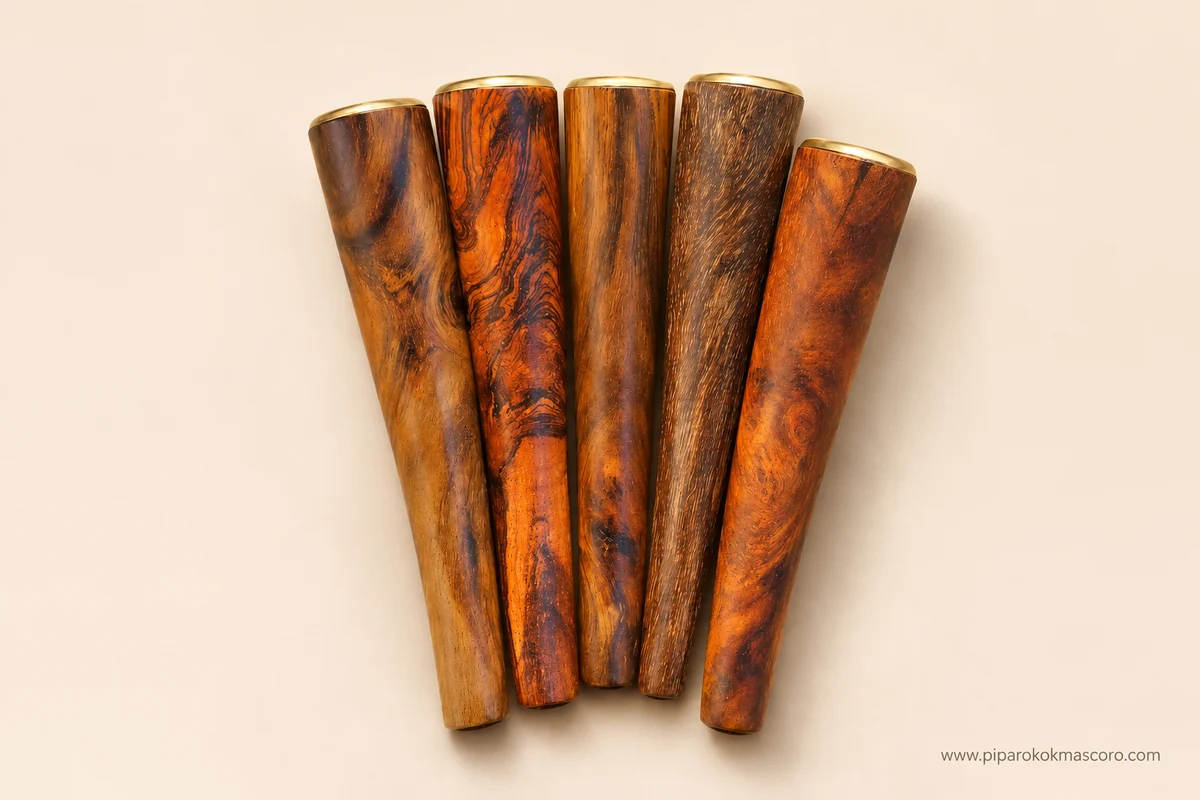
Which wooden cigarette holders are the most expensive?
High-grade agarwood can be among the more valuable materials for cigarette holders, especially if it has a strong scent and other qualities collectors look for. Choice sandalwood and other collectible materials can also command high prices.
I wouldn’t draw up a fixed price list that put every piece of agarwood above every piece of sandalwood or moringa heartwood. Price depends on the quality and size of the material, the workmanship, the rarity of that particular piece and what the buyer and seller agree on. Even two pieces of agarwood can differ enormously in character and price.
Agarwood and the scent that draws collectors
Agarwood has quite a reputation among people who enjoy aromatic woods. In my experience, good agarwood with dark areas can give off a rich fragrance. I’ve sold holders whose scent I could detect simply by lifting them to my nose. To me it can smell intensely sweet, almost cloying. The Javanese word that comes to mind is mblenger.
Wood that looks younger may have a lighter fragrance. Neither colour nor scent alone can establish authenticity or determine the grade of a piece.
Agarwood is widely used in perfume and incense. A study of the history of agarwood use and trade documents its role in social and religious occasions in different communities. Some people also associate it with particular beliefs and traditions. Those meanings belong to the cultures and people who hold them.
Sandalwood has a fragrance of its own
The agarwood I’ve handled often smells sweet and rich. Sandalwood leaves a different impression. To me it has a fruity note with a little tartness that I find pleasant. What people smell can vary with the piece and with the person.
Sandalwood also has a long history in crafts and perfumery. The particular piece of wood, the quality of the scent, the shape and the workmanship all affect the holder’s value. The name “sandalwood” by itself tells you little about what a finished holder should cost.
Black moringa: natural colour and a very hard material
In the trade, “black moringa” is used for several materials. Some holders sold under that name are valued for the natural black colour of the material, which needs no paint. I’ve also encountered a material called galih kelor hitam. It is extremely hard, takes a glossy polish and has to be worked differently from ordinary wood.
Craftspeople who work this hard material describe cutting it with stone-cutting tools and water. Its appearance reminds me of petrified wood. But appearance and hardness alone cannot establish whether a piece is a fossil or identify the tree it came from. The Library of Congress explains that petrified wood forms through mineralisation and replacement of the original material.
Tamarind heartwood has a following and a more modest price
An interesting holder doesn’t have to be expensive. Tamarind heartwood, known locally as galih asem, is relatively affordable and has a following. The wood feels dense and weighty. For me, that gives it a satisfying heft in the hand.
I associate agarwood and sandalwood with their fragrance. What I know tamarind heartwood for is its density and strength. It can appeal to someone who wants a wooden holder to keep and care for over time. I explore the material in more detail in my article on tamarind heartwood.
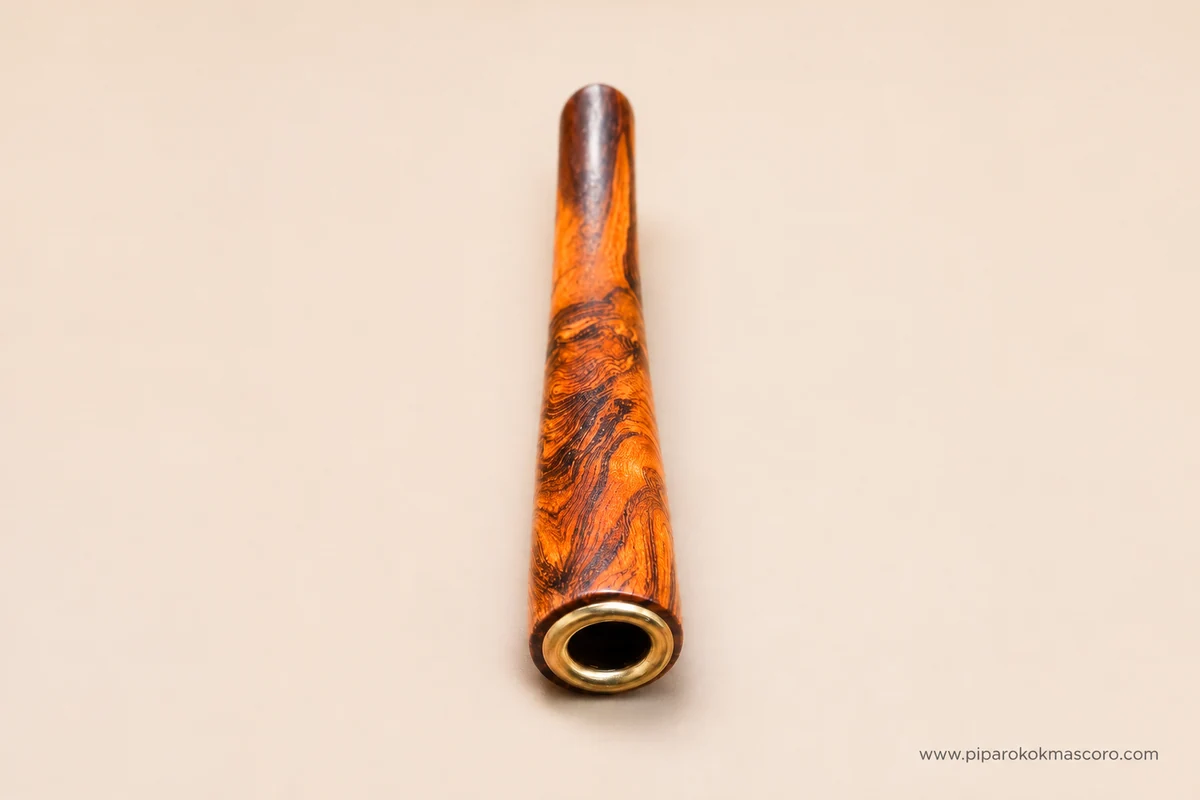
How shape and carving affect value
Imagine two similar pieces of wood. One is turned into a plain holder. The other is carved into a dragon’s head, a snake or another distinctive shape. The hours, complexity and skill involved can give the two pieces very different values.
For collectors, the name of the wood is only part of the story. There’s the maker’s work, the character of each piece and the pleasure of owning something distinctive. A collector may keep several holders: one for the scent of agarwood, another for the character of sandalwood, tamarind heartwood, liwung or another material.
Questions to ask before you buy
Ask the seller where the material comes from, what it is like, what scent to expect, how long the holder is, and what shape and socket size will fit your cigarette. If available, ask for photos or a video of the actual piece that will be sent.
Scent is hard to judge through a screen. A photograph can’t authenticate wood, and smelling a piece doesn’t prove its identity either. Ask how the seller identified it and what their policy is if the piece you receive differs from the description. If comfort matters to you, look at the design too. My article on why smoke can feel hot through a wooden holder explains which design features to consider.
Conclusion
High-grade agarwood is one candidate for a high-value holder, but no single price ranking fits every piece. Sandalwood, material known as galih kelor hitam, and distinctive carvings each have their own appeal. Look for characteristics you enjoy, a clear account of the material, a size that fits and a price within your budget.
FAQFrequently asked questions
Are agarwood cigarette holders always the most expensive?
No. High-grade agarwood can be valuable, but the price depends on the piece, its size, the workmanship and what the buyer and seller agree on.
Is a more expensive wood necessarily a better fit for me?
Not necessarily. It depends on the scents you enjoy, the shape and socket size, your budget and the qualities you like in the material.
Does a black colour prove that the wood is fossilised?
No. Colour and hardness alone cannot establish that a material is petrified wood or identify the tree it came from.
Why can two holders made of the same material cost different amounts?
The quality of each piece of material, its size, the detail in the carving and the complexity of the work can differ. Buyers and sellers may also agree on different prices.

Kharisma Candra
Founder of Pipa Rokok Mascoro in Balung, Jember. Kharisma works with local craftspeople and writes about cigarette holders. About me (in Indonesian)